

A patented access solution developed specifically for structural steel construction.
Patented system
A protected Niftylift innovation
Fully reversible
HeightRider to DeckRider and back
Full Safe Working Load
No performance restrictions
Proven on The Shard
And landmark projects worldwide
For steelwork contractors
- Work directly from the structural deck, floor by floor
- Full working envelope and Safe Working Load retained
- Less scaffolding, faster steel erection, lower cost
For rental companies
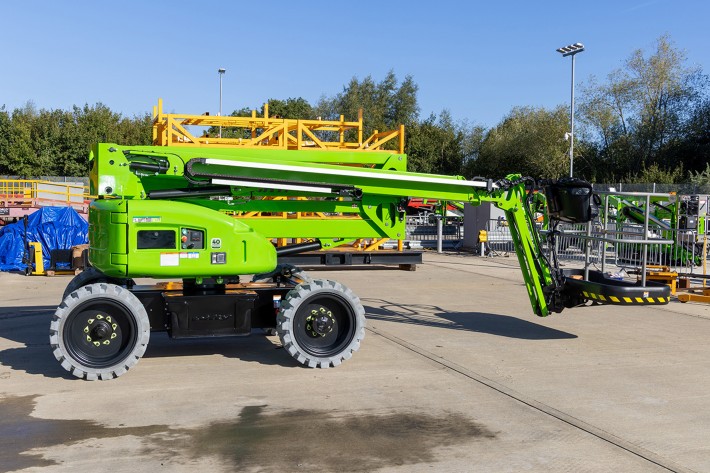
- Two machines in one: self-propelled boom or static-base platform
- Serve specialist demand without dedicating a machine to it
- Simple off-hire: convert back and return to general fleet duty
The challenge: boom lift access on unfinished structural floors
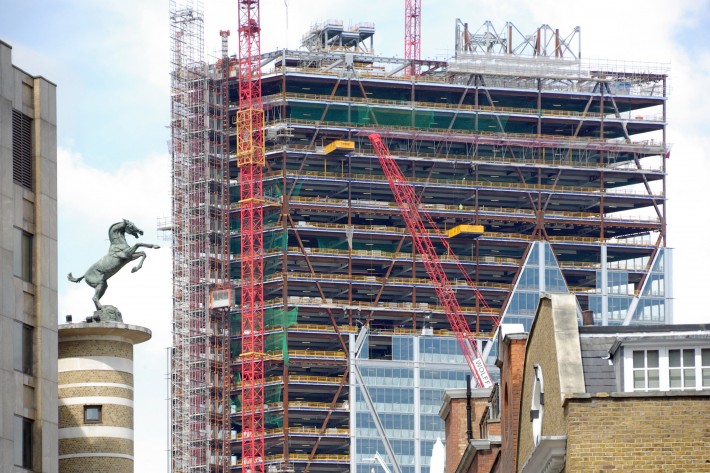
Erecting structural steel on a multi-storey building creates a unique access problem. The floors above ground level are still under construction, and although they will eventually carry substantial loads, they may not be suitable for the concentrated point loading from the wheels of a conventional self-propelled boom lift during construction.
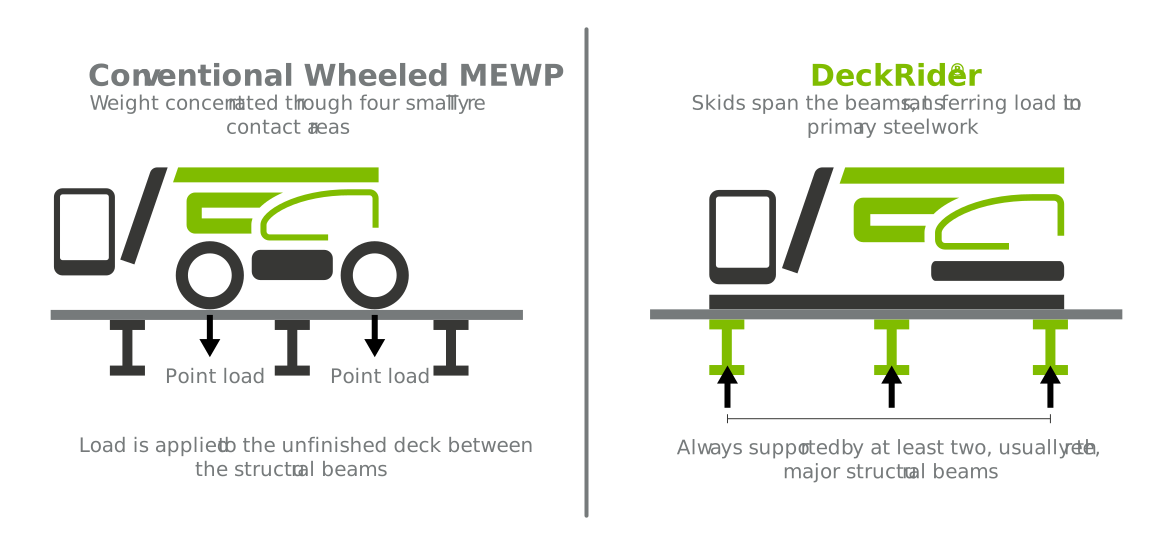
A standard boom lift supports its entire weight through four relatively small tyre contact areas. On an unfinished structural deck, that concentrated loading can rule out conventional mobile access altogether, leaving contractors reliant on slower, less flexible alternatives to reach the steelwork above.
The innovation: skids that span the structural beams
Niftylift engineered the patented DeckRider system to solve this problem at its source, helping contractors build higher, safer and faster. Rather than designing an entirely new machine, DeckRider re-engineers how a HeightRider meets the floor beneath it.
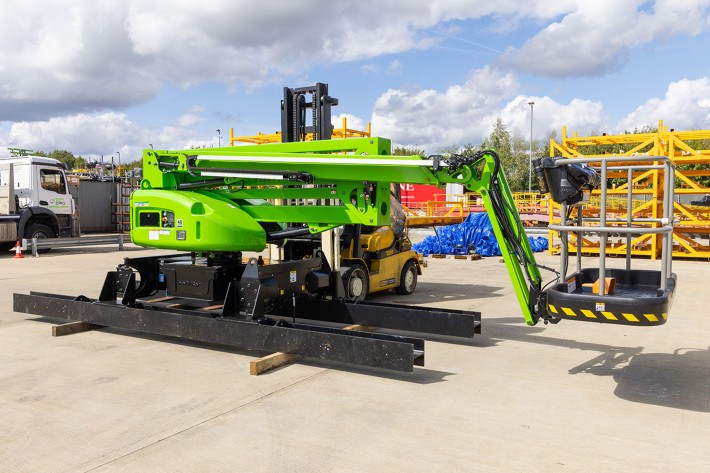
The conversion replaces the machine's wheels with two steel skid assemblies, one on each side. Each skid attaches to the wheel hubs and extends forwards beyond the main body of the machine and rearwards towards the cage end.
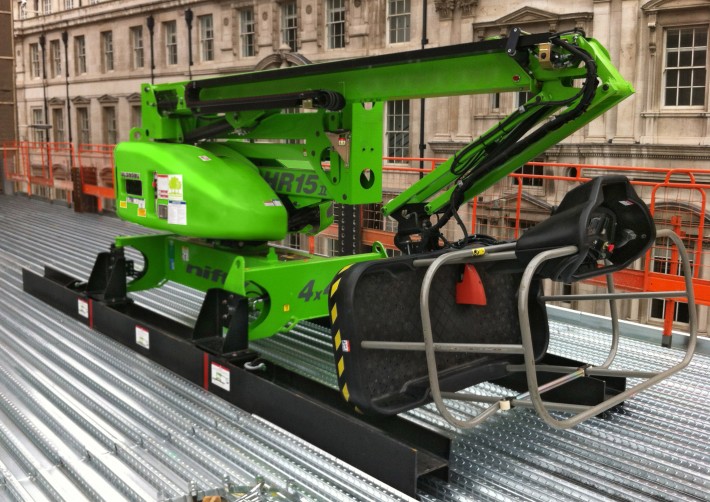
The skids are designed to span the perpendicular structural beams of each floor, so that the machine is always supported by at least two, and usually three, major structural beams. Instead of concentrating the machine's weight through four tyre contact points on the unfinished deck, the DeckRider transfers its load directly into the building's primary steelwork. This makes the machine suitable for positioning on structural floors, subject to the placement and loading requirements for the specific model and site.
Proven on landmark projects: Heron Tower, The Shard and beyond
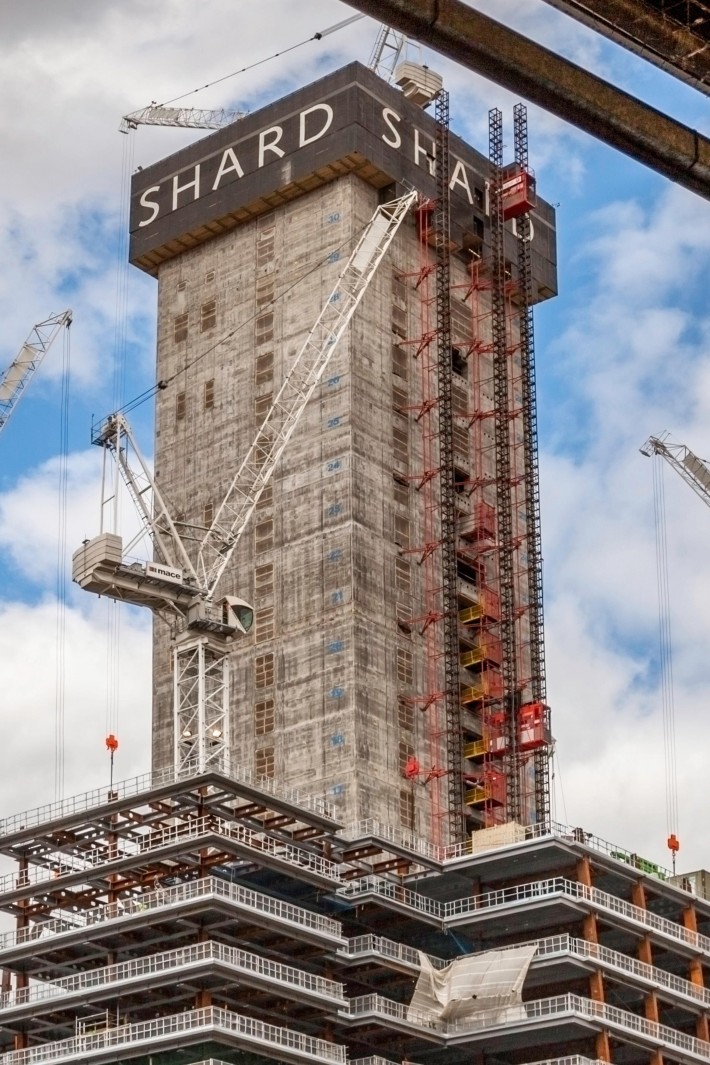
DeckRider is no theoretical concept. First deployed on the Heron Tower project in London, it went on to support the construction of The Shard, The Place and 100 Cheapside, and has since been used on high-profile structural steel projects around the world. That long record of real-world use on some of the industry's most demanding builds is the strongest endorsement of the engineering behind it.
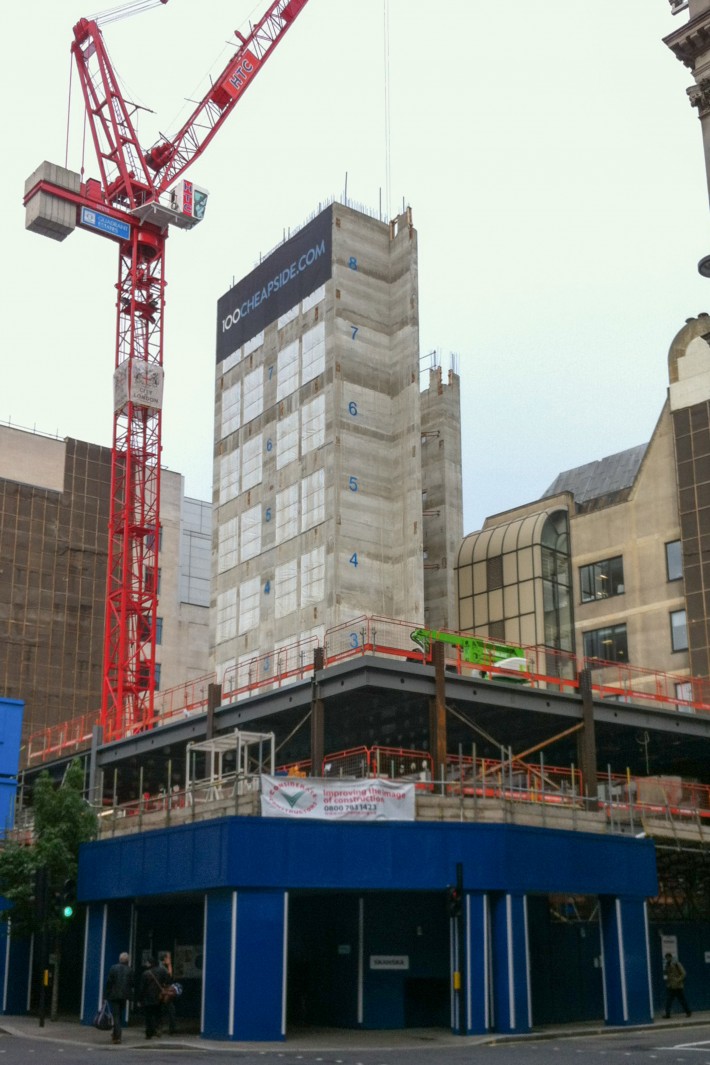
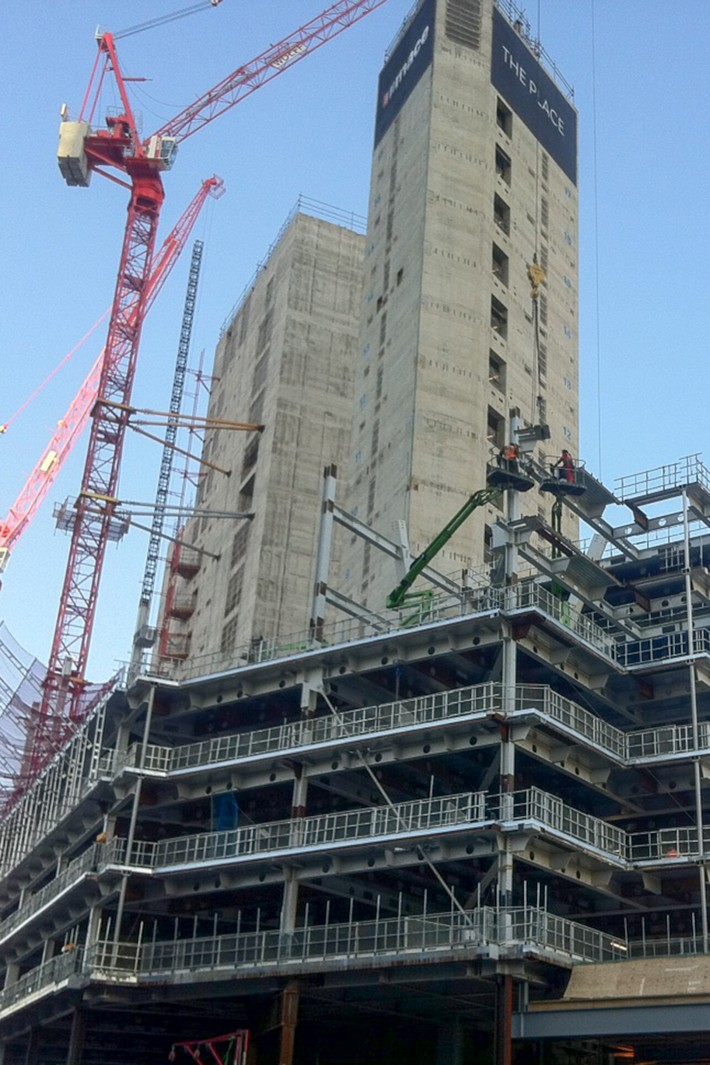
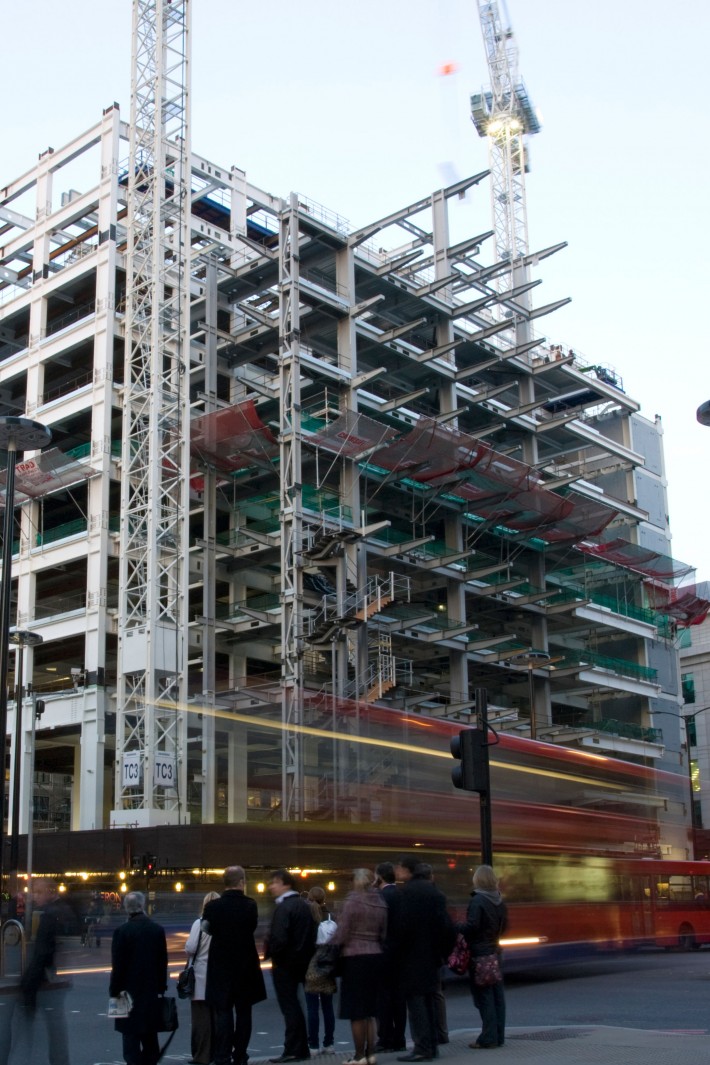
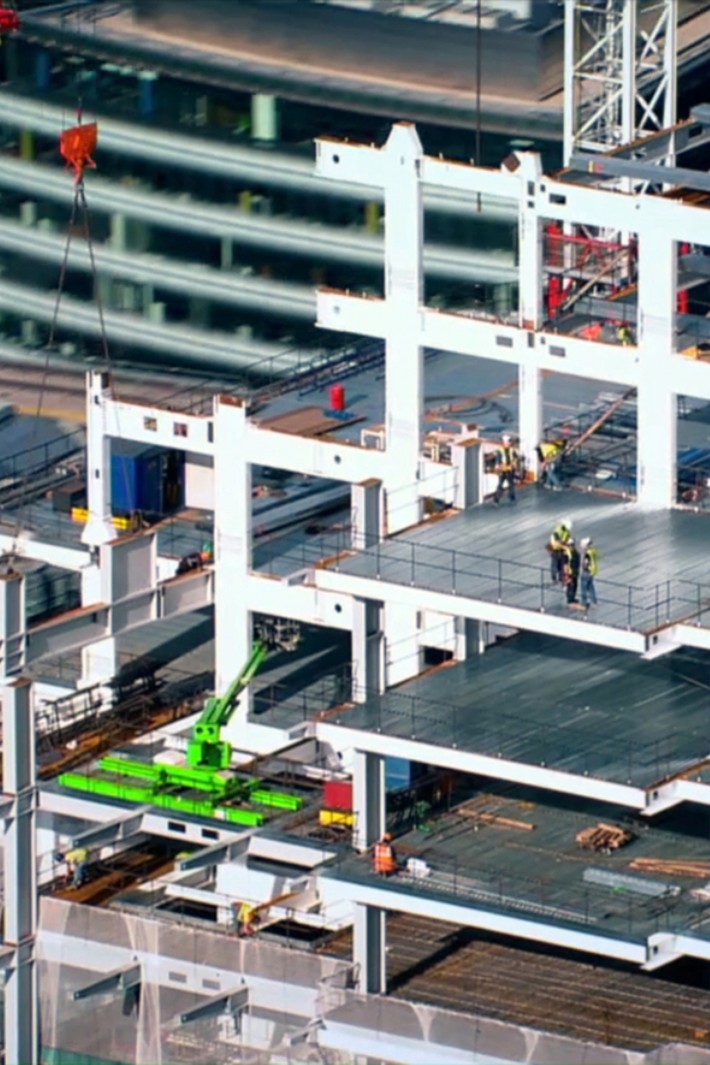
Full performance: working envelope and Safe Working Load retained
The conversion changes how the machine is supported, not how it performs. In DeckRider configuration, the machine retains its full working envelope, full outreach, full working height and full Safe Working Load, with no restricted operating zones and no reduction in platform capacity.
Operators also keep the standard HeightRider features fitted to the relevant model, which may include SiOPS®, ToughCage, Niftylink® and on-board diagnostics, all managed through the machine's familiar platform controls. For an operator, working from a DeckRider feels just like working from the HeightRider it is built on.
The DeckRider lifecycle: rises with your structure, then back again
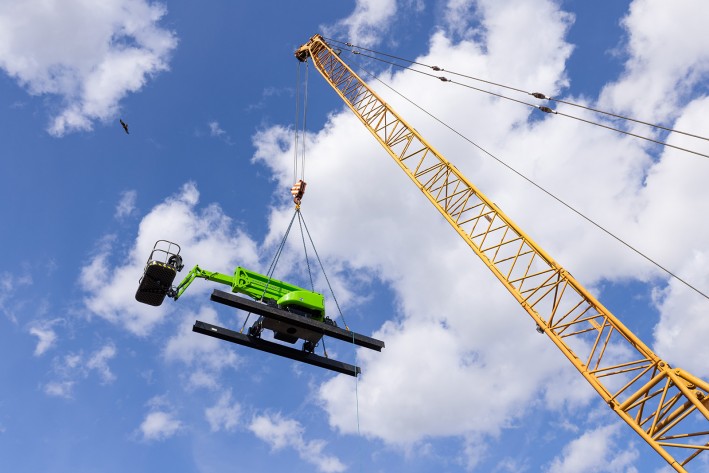
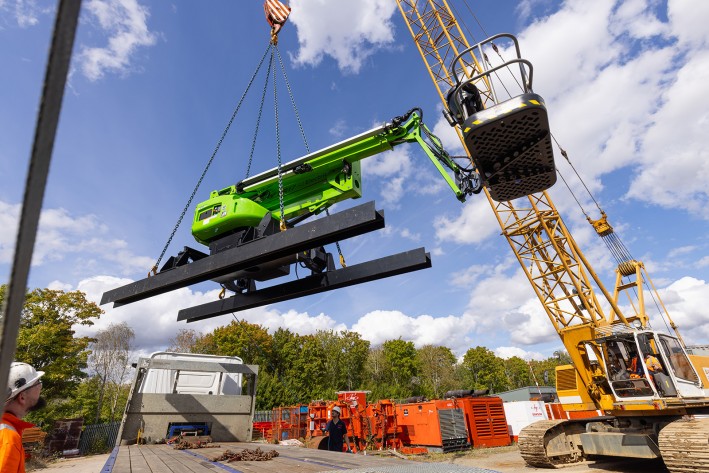
The DeckRider journey is a complete round trip, and every stage uses standard logistics: flatbed truck transport, forklift positioning at ground level, and a single crane pick onto the structure using the dedicated lifting points built into the skids.
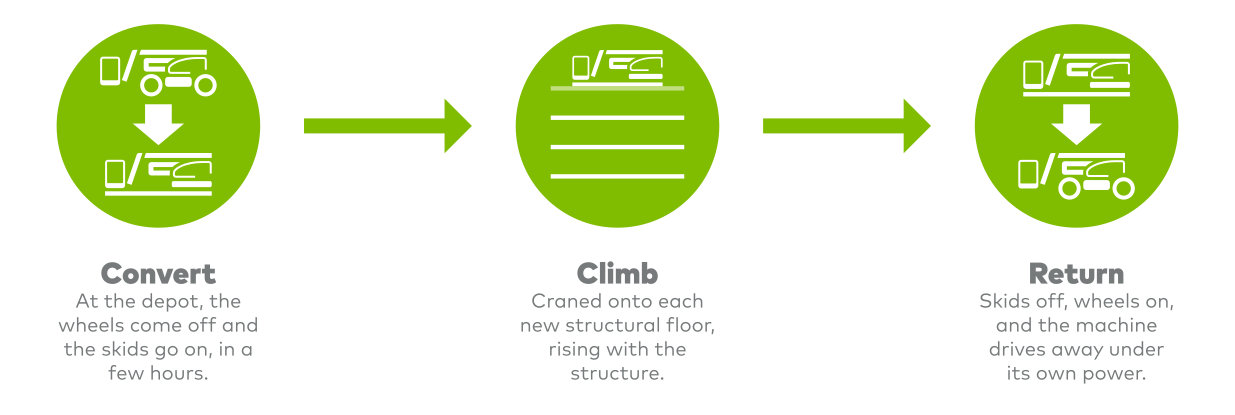
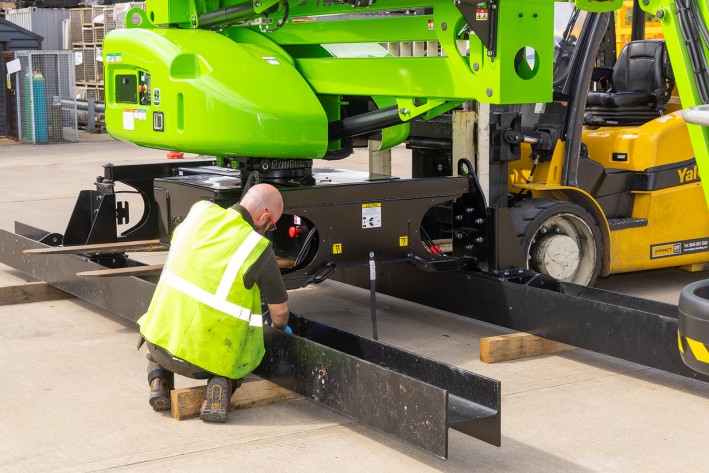
- Convert. At the depot, the wheels come off and the skids go on. The conversion typically takes a few hours and is normally completed by the rental company before the machine leaves, although it can also be carried out on site by a Niftylift service engineer or appropriately authorised and competent personnel working in accordance with the relevant instructions.
- Climb. Craned onto a structural floor, the DeckRider gives operators access to the steelwork and deck construction above: installing beams, bolting structural members, laying decking and fitting edge protection. As each new floor is sufficiently complete, the machine is craned up to it, rising with the structure.
- Return. As the building nears completion, the machine is lowered back down, the skids come off, the wheels go back on, and it drives away under its own power as a standard self-propelled HeightRider, ready for its next hire.
While DeckRider is best known for its role on high-rise landmarks, it is equally relevant to multi-storey structural steel construction of every scale.
For steelwork contractors: faster structural steel erection
DeckRider brings the performance and reach of a HeightRider onto structural floors where a conventional wheeled boom may not be suitable. For contractors, that means:
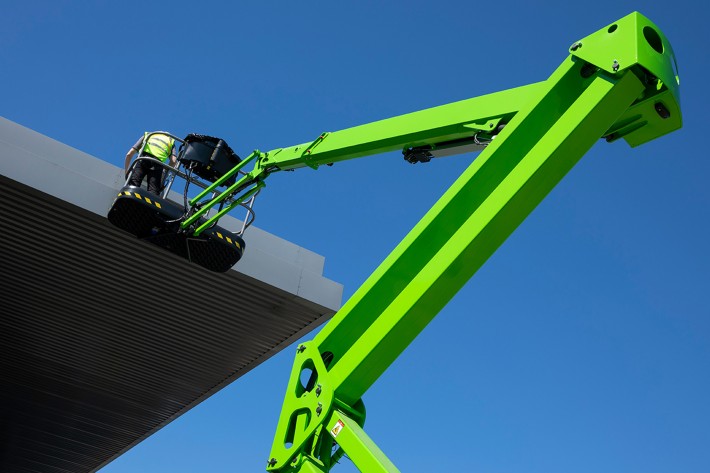
- A purpose-built access solution for working on the steelwork above the current deck
- Full working envelope and full Safe Working Load, with no operating restrictions from the conversion
- Reduced reliance on scaffolding and less time spent erecting and repositioning alternative access systems
- Multiple structural installation tasks completed from a single machine
- Improved floor-by-floor efficiency, helping to reduce construction time and operating costs
- Familiar Niftylift controls and safety systems throughout
Planning a structural steel project?
Speak to a member of our sales team about DeckRider availability for your build.
For rental companies: two machines in one
Because the conversion is fully reversible, the same base machine can work as a conventional self-propelled HeightRider or a specialist static-base DeckRider, creating a genuine two-machines-in-one proposition:
- Serve specialist structural steel applications without permanently dedicating a machine to a niche configuration
- Increase the versatility and utilisation of selected fleet machines
- Respond flexibly to different types of customer demand
- Off-hire made simple: convert back to self-propelled and return the machine to general fleet duties
- Retain the reliability, serviceability and transport characteristics of the underlying HeightRider
Compatible HeightRider models
The DeckRider conversion is available for selected HeightRider models, including the HR15E, HR15 4x4, HR17E and HR17 4x4, covering both machine sizes and a choice of powertrains. For the latest information on model availability, please speak to a member of our sales team.
DeckRider FAQs
Can a DeckRider drive itself?
No. With its wheels removed, the DeckRider is a static-base elevating work platform. It is positioned at ground level using suitable forklift equipment and lifted onto or between structural floors by crane, using the dedicated lifting points built into the skids.
How long does the DeckRider conversion take?
The conversion typically takes a few hours, depending on the lifting equipment, tools and personnel available. It is fully reversible: remove the skids, refit the wheels, and the machine returns to its standard self-propelled HeightRider configuration.
Which Niftylift models can be converted?
DeckRider is available for selected HeightRider models, including the HR15E, HR15 4x4, HR17E and HR17 4x4. Speak to a member of our sales team for the latest model availability.
Does the conversion reduce the machine's performance?
No. In DeckRider configuration the machine retains its full working envelope, full outreach, full working height and full Safe Working Load, with no restricted operating zones and no reduction in platform capacity.
Who can carry out the conversion?
The conversion should only be performed by the rental company, a Niftylift service engineer, or appropriately authorised and competent personnel working in accordance with the relevant instructions. It is normally completed at the depot before the machine leaves, but can also be carried out on site.
Placement, loading and technical information
The exact loading and support requirements depend on the machine model, its configuration and the supporting structure. Full details, including machine placement and loading information and dedicated lifting diagrams, are provided in the model-specific DeckRider Operations Manual, and the correct figures for the specific machine and configuration must always be used.
Find out more
To find out how DeckRider® could support your next structural steel project, or to discuss adding DeckRider capability to your fleet, speak to a member of our sales team today.